What is confirmed
Steam describes loot, recipes, weapons, armor and furniture as part of the loop. Steam Community guide material adds the practical item contexts used below: basic resources, recovery, crafting inputs, shop stock and fixtures.
Item decision table
| Context | Examples from current evidence | Default action |
|---|---|---|
| Survival | Healing potions, defensive gear | Keep for the next risky floor |
| Crafting | Wood, stone, iron, leather, recipes | Reserve until the next craft is clear |
| Shop stock | Weapons, armor, consumables and other loot | Test one item and record demand |
| Quest board | Expedition achievements and requested rewards | Keep until the hand-in is complete |
| Fixtures | Tables, racks, decorations and shop models | Compare utility, comfort and prestige |
| Regretted craft | Any crafted weapon, armor or furniture you no longer want | Deconstruct it to recover part of the crafting materials |
How to read item prices
The game's price is affected by market state, shop prestige and decoration context. Use the current market signals and the item’s shop context instead of treating one observed sale as a universal price.
The September 4 SHOP UPDATE rebalanced base market values across item categories and reworked how bonuses apply to base prices, so any price note written before that date is suspect. The same update expanded the item UI — hover over merchandise for a deeper stat and sales breakdown. The August 31 storage-chest safeguards remain the reason your stock survives between runs.
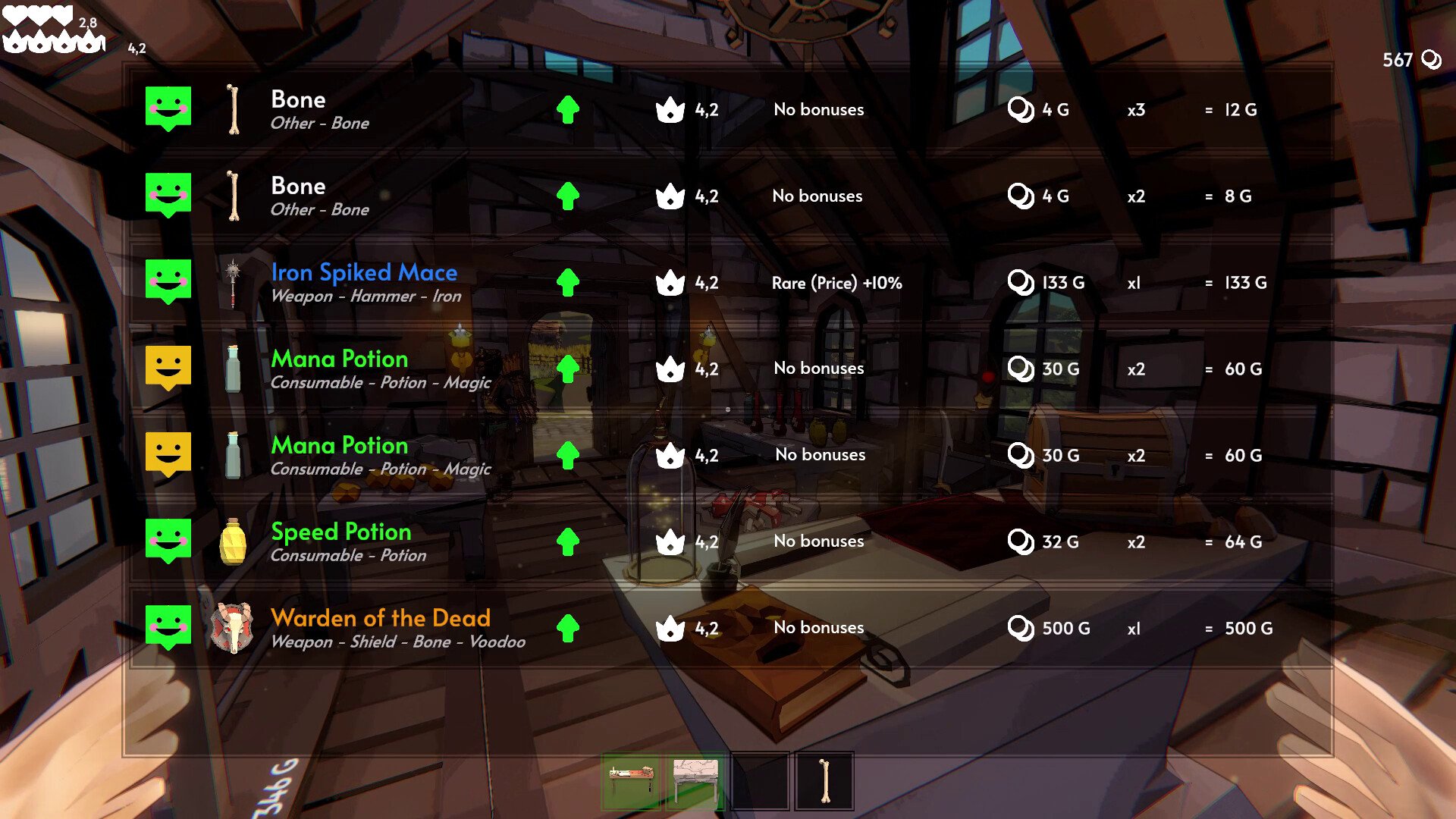
Image for reference only; it does not depict the specific content covered in this article.
Sources and scope
Source: the Steam store description for the item economy and the Steam Community Guides hub for player item and farming guidance.
Was this guide helpful?
Let us know if we can improve this guide.